
When did ads stop taking risks?
Advertising lost its edge the moment it traded creative risk for digital optimisation. Since that shift around 2006, the industry has tried to buy its way out. It isn't working.
By the numbers
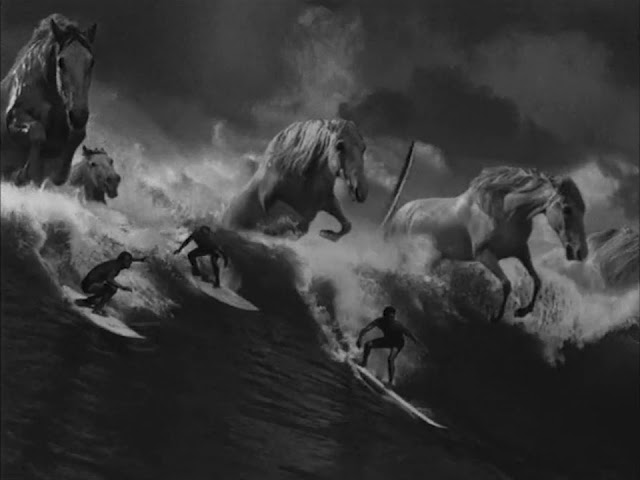
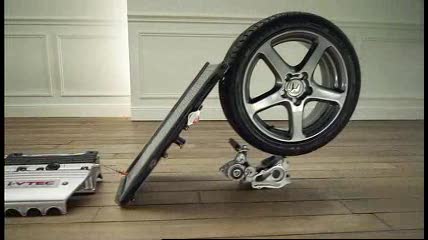
Historically, advertising competed on the strength of its craft. The ambition for major campaigns was to build a world worth buying into, leaning heavily on creative execution. The standout work of that era reflected this—whether it was claymation idents, cinematic commercials or a chocolate brand launching a hit around a gorilla playing the drums. The operating assumption was that audiences wanted to be rewarded for their attention, favoring nuance over a direct pitch.
Some of that work




 ▶
▶ 1999 · TBWA London
PlayStation: "Double Life"
What people say watching it today
What the data actually shows
The decline isn't just a nagging feeling. It's right there in the numbers.
Orlando Wood's analysis for the IPA tracked the creative characteristics of advertising from 2000 to the present. Around 2006, something fundamental shifted. The work started getting measurably flatter, more literal, and a lot less funny.
There are two ways to look at what caused this squeeze, and they both play a part.
The Supply-Side ArgumentFewer genuinely exceptional ads are being made, so the top end is no longer miles ahead of the pack. This is Wood's core point: the work itself got worse, so the ceiling dropped.
The Context ArgumentGreat work still gets made, but modern channels no longer support its advantages. A two-second skippable slot collapses the gap between a masterpiece and a placeholder because neither has the time to land. The floor and the ceiling have merged simply because the medium has stopped rewarding the difference.
The industry's response was to compensate with media spend. If the creative couldn't carry the weight, more paid reach would. That logic flipped the traditional budget split. Most brands now dump the majority of their cash into short-term performance and activation, even though three decades of IPA data consistently recommends the exact inverse.
The IPA's effectiveness database covers three decades of campaigns. In it, emotional, brand-building work is almost twice as likely as rational messaging to produce a major increase in profit, and that gap holds across the whole dataset [1]. What has changed is how little budget we now give it.
Timeline of the Decline
~2006
The data marks the turning point. Work gets measurably flatter and more literal.
2007
The iPhone launches. Context becomes mobile, fragmented, and impossible to guarantee.
2012
Facebook goes public. Performance advertising industrialises, and brand budgets start following quarterly dashboards instead of instincts.
Now
Ad attention has declined 31% over three years. Playing it safe clearly didn't protect our reach.
How context collapsed
The old media landscape forced us to use judgement. If you bought a spot in an MTV commercial break, you knew roughly who was watching and what headspace they were in. You had to make a call based on feeling. That context gave creative work room to be genuinely odd, because backing a strange idea was a human judgement call, not a metric.
 ▶
▶ 1995 · Wieden+Kennedy
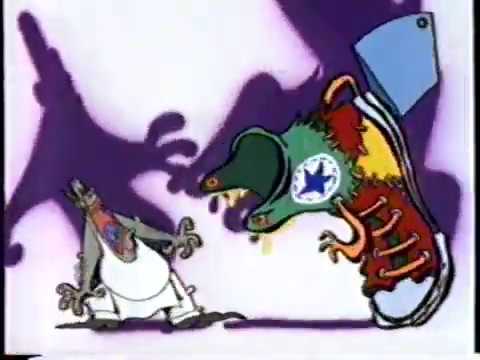
Converse: "Lupo's Nightmare"
Imagine pitching an ad in a modern boardroom where a sneaker murders its owner. That is what actually changed. It's not that agency ideas got worse; it's just that companies lost the appetite for risk.
The digital feed doesn't work like an old TV block. The exact same ad goes to someone half-asleep on a bus, someone between meetings, or mid-scroll on a dopamine bender. Because every single interaction can now be tracked, work gets designed to perform on a dashboard. It becomes safe, readable in under two seconds, and aimed at a viewer assumed to be completely distracted.
The trade-off was supposed to be worth it: tighter measurement, lower risk, and more predictable returns. Instead, the work became less interesting and audiences responded accordingly. Ad attention fell by 31% between 2022 and 2025, dropping from an already historic low.
An analytical culture has been "reducing what was once a dazzling art form to dreary science."
Orlando Wood — Lemon / IPA · 2019
Finding our way back
The real loss to the industry is the discipline of world-building. The most enduring campaigns did more than deliver a clear message; they constructed distinct worlds that audiences actively wanted to inhabit. Restoring this standard requires putting modern optimisation tools and metrics back in their proper place, using them to validate the work rather than substituting them for human judgement.
For brands & marketers
Brief for feeling, and protect the budget that builds it
- Hold the line on brand-building. The evidence says it's where your profit compounds over time, yet it's always the first thing to get cut.
- Brief for one feeling, not five messages. Pure emotion consistently outperforms a rational checklist.
- Accept that you will polarise. Work that moves half the room deeply beats work that mildly pleases everyone.
- Judge a route by whether it'll be remembered, not whether it tests safe in a focus group.
For agencies & creatives
Pitch the idea you can't fully justify yet
- Fight the optimisation reflex. If logic alone got you to an idea, it got your competitor there too.
- Build fluent devices. Think characters, a distinct line, or a recurring image. These are the assets that compound into long-term fame.
- Make work that risks being ignored by some, so the people it does reach actually have something to hold onto.
- Bring back what the data says went missing: humor, characters, place, and a genuine sense of time.
For the people measuring success
Stop letting short-term metrics judge long-term work
- A click-through rate is not a brand. Don't grade a fame-building campaign on a performance dashboard.
- Measure feeling, fame, and distinctiveness. These are the actual metrics that predict commercial growth.
- Give ideas time to breathe. The effects that matter accrue over years, not a fortnight.
- Reach is not a proxy for resonance.
The optimisation tools we use today aren't going away, but the questions we ask of them have to change. Brand that run entirely on short-term activation are doing it at the expense of long-term equity.
Balancing that tension is exactly what I do. I help brands build the creative platforms and the long-term strategy that equity is actually built on, ensuring metrics are used to validate the work rather than substitute for the judgement that makes it great. If you're looking to rebalance that split, let's talk.
Sources & further reading
[1]
The Long and the Short of It / Effectiveness in Context
Les Binet & Peter Field, IPA
[2]
The Crisis in Creative Effectiveness
Peter Field, IPA · 2019
[3]
Creative Effectiveness / LINK database (attention percentile, 2023–2025)
Kantar
[4]
Alchemy: The Surprising Power of Ideas That Don't Make Sense
Rory Sutherland
This essay also lives at olliehall.co
"This is one of the greatest ads ever. Sends shivers up my spine"
"The late 90's period was the peak of creativity, artistic freedom and 'edginess' in ads, TV and cinema. You won't see anything like this anymore."
"Stands the test of time. 20+years and still beautifully relevant."
"They could easily reuse this ad for the PS4 or PS5 and people would still be blown away"
"Absolute masterclass in ad making. Still sends shivers up my spine"
"Confessions of a gamer. This was the advert that inspired me to get a PlayStation."